
Thank you for attending the workshop and making it a huge success! Enjoy information on the speakers and pictures from the event below.
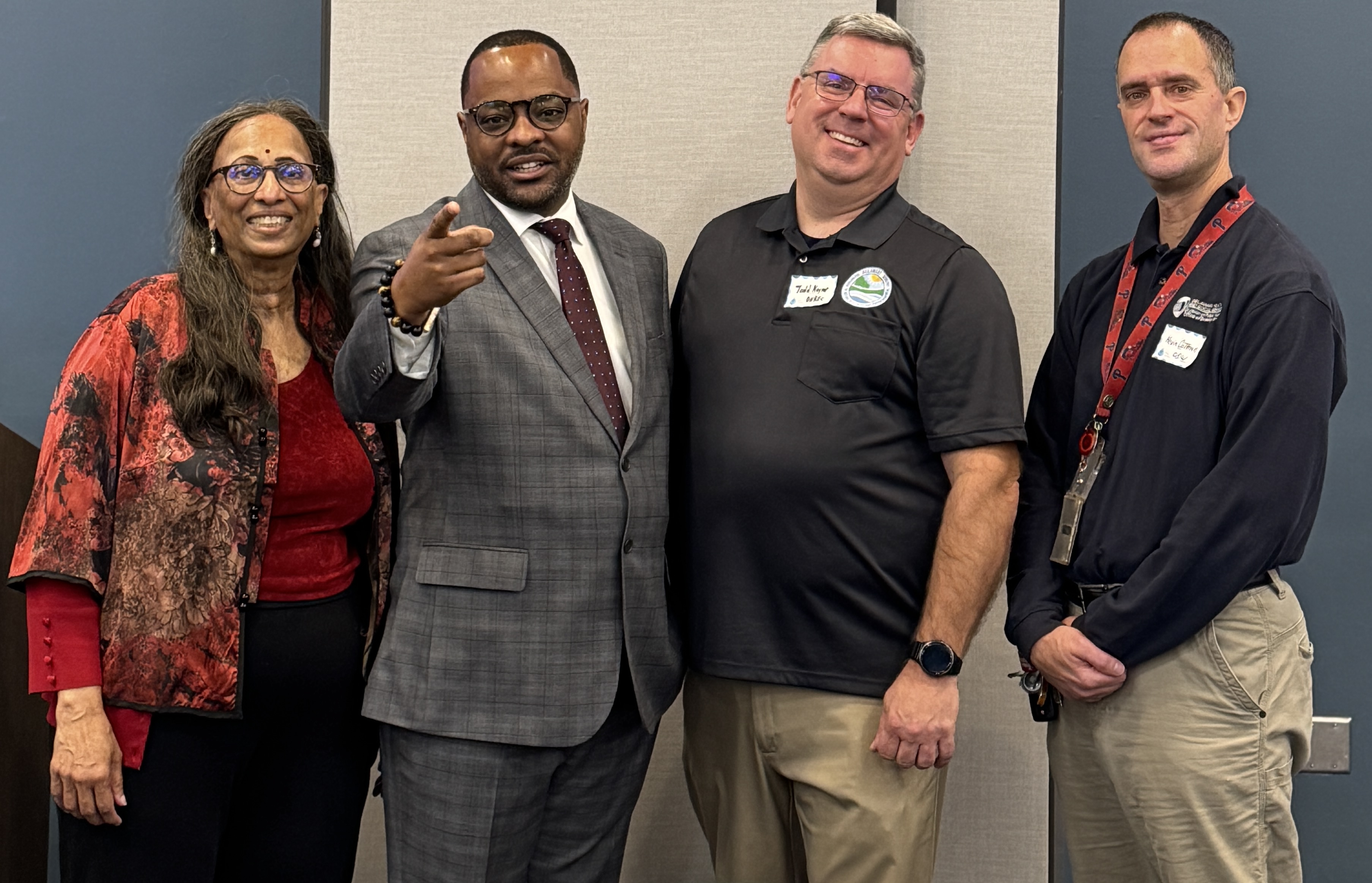
Pictured Left to Right: Dr. Seetha Coleman-Kammula, Senator Darius Brown, Todd Keyser, Kevin Cottman.
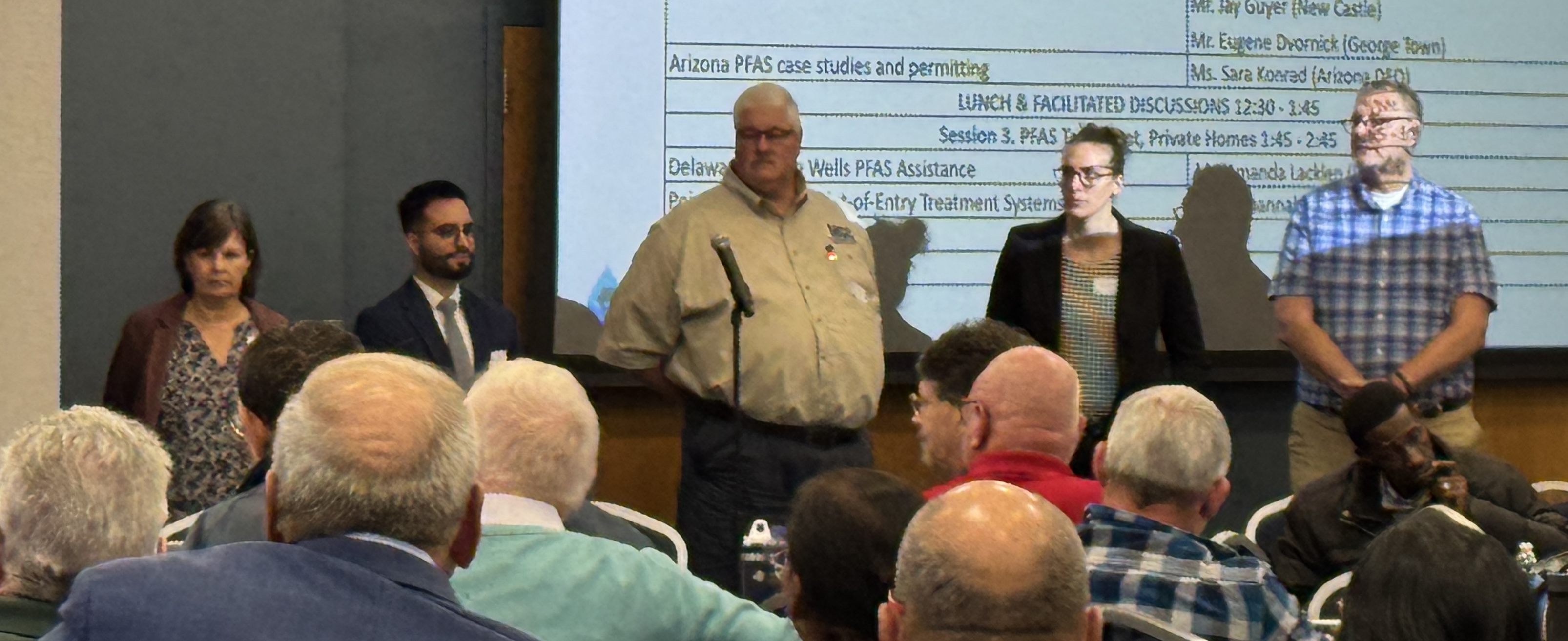
Pictured Left to Right: Sara Konrad, Dr. Jimmy Murillo Gelvez, Jay Guyer, Kate Mills, Eugene Dvornick.

Pictured: Dr. Jimmy Murillo Gelvez listens as Kate Mills speaks.
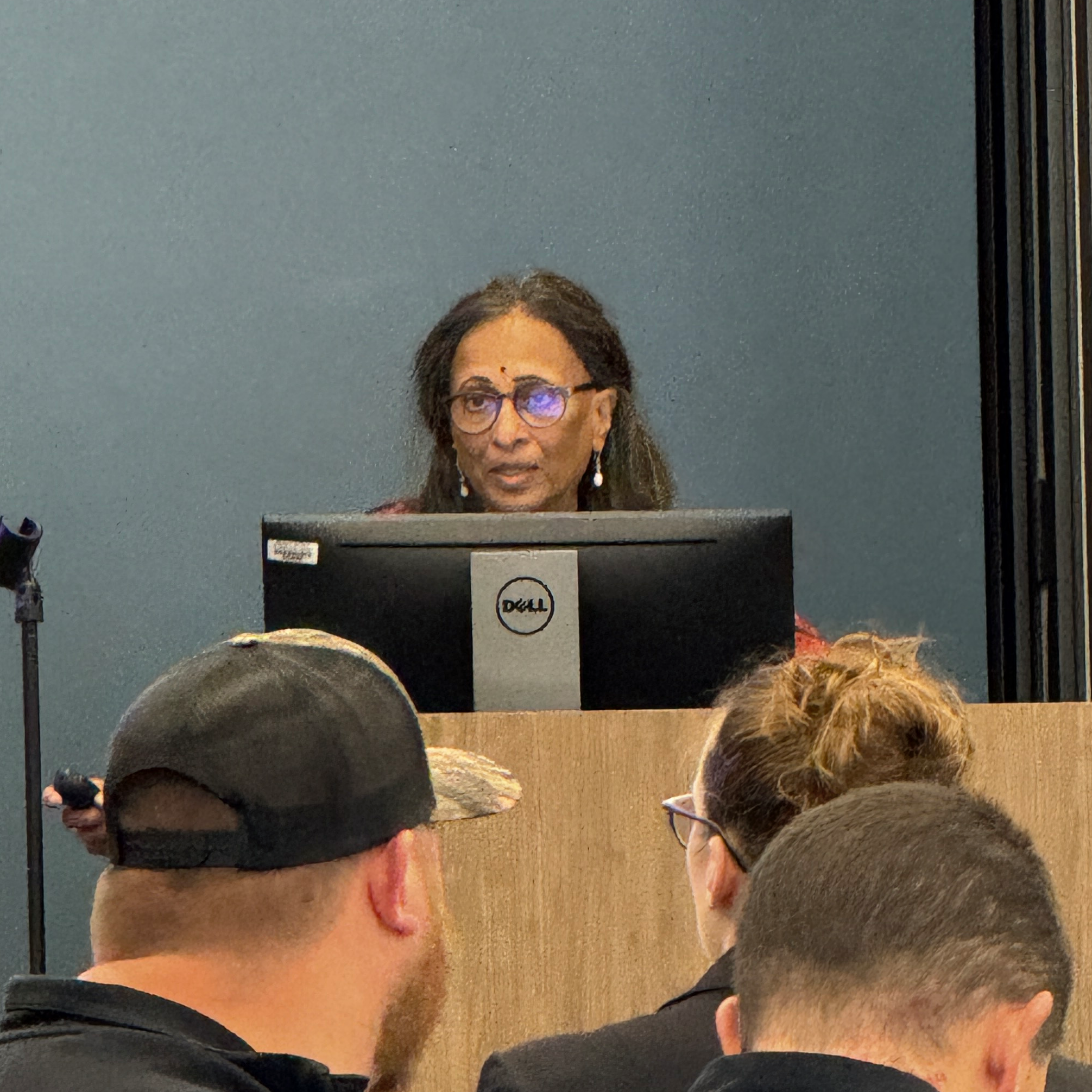
Pictured: Dr. Seetha Coleman-Kammula welcomes the attendees
EVENT SPEAKERS
Dr. Seetha Coleman-Kammula will give an overview of the work at the Center on precision detection and research for remediation of PFAS. With equipment and expertise under one roof for PFAS analysis. Water treatment design, and engineering services, the nonprofit Center has been a resource for public water systems in Delaware. The aim of the workshop is to share information about what the State of Delaware regulators, State agencies, towns, and municipalities and the Center are doing to address removal of PFAS from drinking water and promote collaboration and learning.
Senator Darius Brown
Delaware Senate
Senate Bill 72 requires the Division of Public Health (Division) to create a website where Delaware residents can find out the level of PFAS, also known as forever chemicals, in their public drinking water systems. This Act also requires the Division to notify public water utilities if the PFAS in their water exceeds certain limits, known as maximum contaminant levels, or MCLs. Water companies receiving this notice from the Division must then notify their customers that the PFAS levels in their water exceed the MCLs.
Kevin Cottman
Office of Drinking Water
Mr. Cottman will share information on alignment of SB72 with ODW’s mission, rollout of initial PFAS monitoring, transfer of data and how information will be made available online to empower drinking water operators and communities to address PFAS. Kevin is the Public Water System Supervision (PWSS) Program Manager with the Delaware Office of Drinking Water. He has been with the Office of Drinking Water for 19 years, working in multiple different roles during his time there. His current position is to oversee compliance with the Safe Drinking Water Act. He ensures that all Public Water Systems are in compliance through the help of his staff. This includes compliance with all chemical and biological sampling and sanitary surveys. He is also responsible for providing EPA with quarterly updates on the status of all Public Water Systems in Delaware
Removal of per- and polyfluoroalkyl substances (PFAS) from drinking water via adsorption on GAC and/or ion exchange are among the most widely applied and cost-effective treatment strategies available to date. Yet, with a growing number of commercial media—each claiming superior PFAS removal performance—selecting the right adsorbent for a specific application can be challenging. This presentation will provide a practical overview of the most used media, including granular activated carbon (GAC) and ion exchange resins (IXR), as well as emerging materials such as organoclays and cyclodextrins. We will discuss how to evaluate PFAS removal performance, key factors to consider when integrating these technologies into a treatment train, and the potential operational tradeoffs that may arise once in service. Finally, we will touch on cost and liability considerations related to media replacement and disposal to help utilities make informed, long-term decisions.
New Castle MSC, City of dover, Georgetown
The speakers will share their experience in addressing PFAS in water systems from detection of PFAS to installing and operating PFAS treatment systems. The presentation will highlight why PFAS treatment at each site is different, and why supply of safe drinking water is more than just treating PFAS. Amounts and types of PFAS and ongoing treatments for other contaminants vary from well to well at a single PWS and from site to site. Their presentations will describe how they have approached technical, managerial, and financial aspects of PFAS treatment - selecting vendors and treatment media, engineering companies, evaluating pilot-scale options, addressing operator training and data management needs. Funding strategies and long-term planning considerations will also be discussed.
Arizona DEQ
Through a collaborative approach, the Arizona Department of Environmental Quality (ADEQ) is providing technical and financial support to small and disadvantaged public water systems impacted by PFAS. By collaborating closely with local communities and moving beyond one-size-fits-all solutions, ADEQ helps Arizona’s water systems develop and implement long-term, sustainable strategies for safedrinking water. The presentation will detail how ADEQ is working with impacted communities to develop and implement tailored solutions that protect public health and ensure future regulatory compliance, highlighting projects such as piloting treatment, treatment design, interconnections, reconfigurations of distribution systems, and well investigations. It will also touch on the permitting processes at ADEQ.
DNREC
Mr. Todd Keyser from DNREC will share the work State of Delaware agencies have been doing to address per and polyfluoroalkyl substances (PFAS) actively since 2018. The team has adopted a dynamic strategy to understand the presence and risk presented by exposure to PFAS via our daily lives and through releases to the environment. The presentation will detail the work underway by DNREC to sample across Delaware in multi-media, understand potential signatures of the PFAS detected and locate source areas that can be addressed through regulation and policy. The collaborative efforts of the State of Delaware agencies aim to achieve these strategic goals: mitigate consumption, identify sources, eliminate sources.
DHSS
The Office of Environmental Hazards and Toxicology, within the Delaware Health and Social Services, Division of Public Health (DHSS), aims to increase public awareness surrounding Per- and Polyfluoroalkyl Substances (PFAS) through educational outreach initiatives, Continuing Medical Education (CME) courses for physicians and medical professionals, and conducting research studies. Towards this end, DHSS is expanding the private well program throughout the entire state of Delaware to screen for PFAS, bacteriological, and additional chemical contaminants in well water. If the water must be treated for any of these contaminants, DHSS will offer Point of Use (POU) or Point of Entry (POE) water treatment systems capable of removing these contaminants to all impacted private well owners, either at no or little cost to the well owner. The private wells program will include a cursory home inspection to assess exposure to PFAS, in ways other than drinking water. In addition, DHSS is also spearheading a new research study that will focus on health care claims data and use measurements of PFAS in samples of blood, dust, urine, and drinking water. The results from these two studies will be used to organize continuing medical education courses and reduce exposure from air, soil, food, and inhalation pathways.
Sharp culligan
PFAS POU/ POE systems will be described including selection criteria for each type of system and situations a POE or POU system would be the preferred method of treatment. The benefits of POU and POE systems will be discussed, as will proper residential system design and require preventative maintenance. Certified products, certified components, and implications of product certifications will be covered. The presentation will conclude with a case study from NJDEP.
.jpg)

